Date: 2026.03.16
On 9 March, the acceptance and review meeting for the "Preservation and Restoration Project of Dunhuang Linen Painting Collected by Shaanxi Normal University", funded by the ByteDance Ancient Books Preservation Special Fund under the China Foundation For Cultural Heritage Conservation, and undertaken by Documents Restoration Section of the NLC Ancient Books Library, was held in the National Library of China.
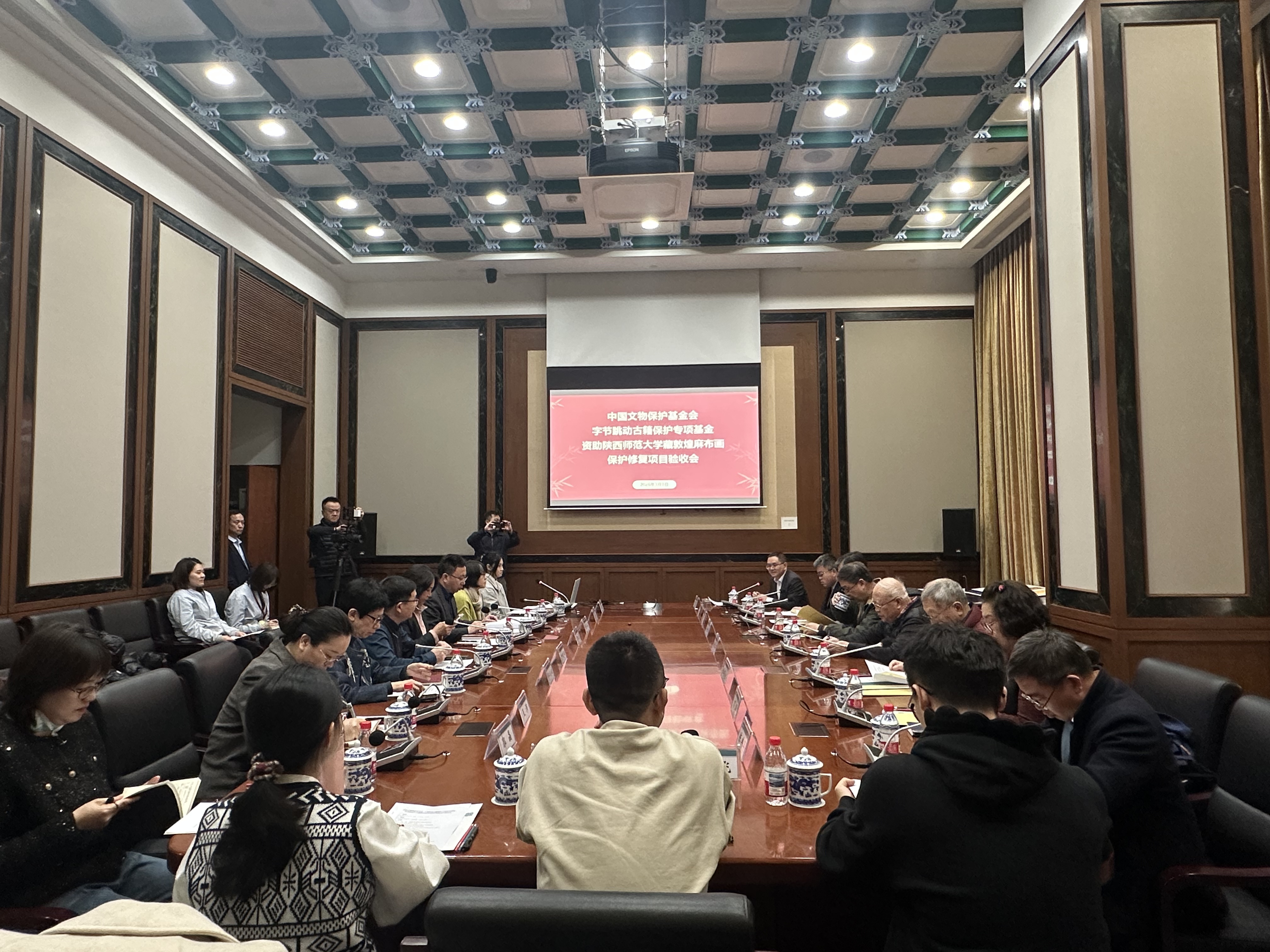
The expert panel conducted a comprehensive review of the project implementation and restoration outcomes through briefings, on-site inspections, technical inquiries and other procedures. They unanimously approved the acceptance inspection and spoke highly of the project’s achievements.
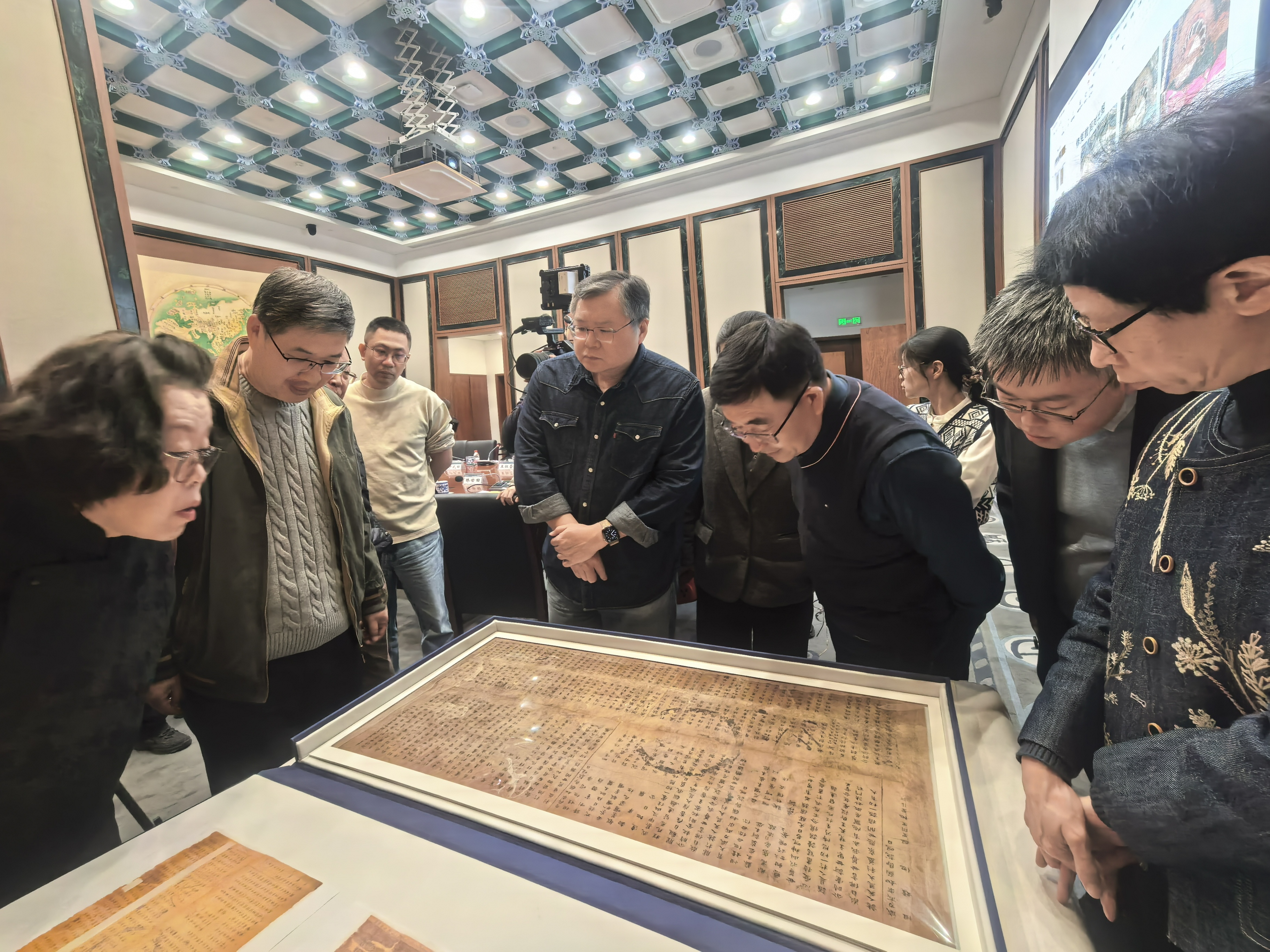
Review experts stated that this restoration achieved a deep integration of tradition and technology. The extensive application of modern analytical techniques and microscopic observation methods enabled conservators to gain a more thorough understanding of the cultural relics’ materials and original craftsmanship. As a result, more scientifically accurate and compatible materials were used to maximally restore the artistic features and historical information of the relics.
The Dunhuang linen painting restored in this project was unexpectedly discovered in March 2023 by the Library of Shaanxi Normal University during the sorting of its rare book storage. The painting measured 91cm in length and 51.3cm in width. On the front, the linen painting depicted a standing image of Guanyin Bodhisattva under a canopy, flanked by the Good and Evil children on either side. The reverse side was mounted with a hand-copied Tang-dynasty manuscript of the Suvarnaprabhasottama Sutra, forming a rare "painting and scripture combined" format. Very few paintings from the Dunhuang Library Cave were preserved in domestic collections. This precious Dunhuang cultural relic, which combined the attributes of painting and hand-copied scripture, featured a unique composite form unseen in other Dunhuang paintings and documents, making it exceptionally valuable.
In 2024, China Foundation For Cultural Heritage Conservation, the National Library of China (China National Center for Preservation & Conservation of Ancient Books), ByteDance initiated the second phase of the "Public Welfare Project for the Preservation and Utilization of Ancient Books." After careful consideration, the Library of Shaanxi Normal University submitted an application for the restoration of Dunhuang linen painting. The project was approved upon review, the document restoration work was entrusted to the Documents Restoration Section of the NLC Ancient Books Library.
During the project implementation, the restoration team from the Documents Restoration Section of the NLC Ancient Books Library adhered to a scientific and rigorous work philosophy and established a complete workflow consisting of investigation, demonstration, restoration, and documentation. Prior to restoration, the team conducted a systematic condition survey, information collection, and scientific analysis to accurately identify the deterioration issues of the artifact. Experts in document restoration and Dunhuang Studies were then invited to conduct joint deliberations and tailor-make a restoration plan.
To address the various deteriorations of the linen painting, including losses, creases, tears, distortions, stains, and lifting areas, the restoration team adopted an innovative integrated restoration approach without separating the painting from the sutra text, thus maximally preserving its original mounting structure. During the restoration, the team not only established visual reference targets through digital technologies, but also produced repair paper and silk based on compositional analyses of the original linen and paper. These materials were subjected to artificial aging treatments to achieve a high degree of material compatibility with the original artifact. Based on traditional silk painting and calligraphy restoration techniques, the team innovatively applied an “inlay repair” method, which successfully resolved the restoration challenges posed by this artifact’s unique structure. Scientifically designed storage and display mounts were also fabricated to meet both preservation and exhibition requirements. Furthermore, detailed restoration records were maintained throughout the entire process, ensuring complete documentation, traceability, and re-examination of all restoration procedures.
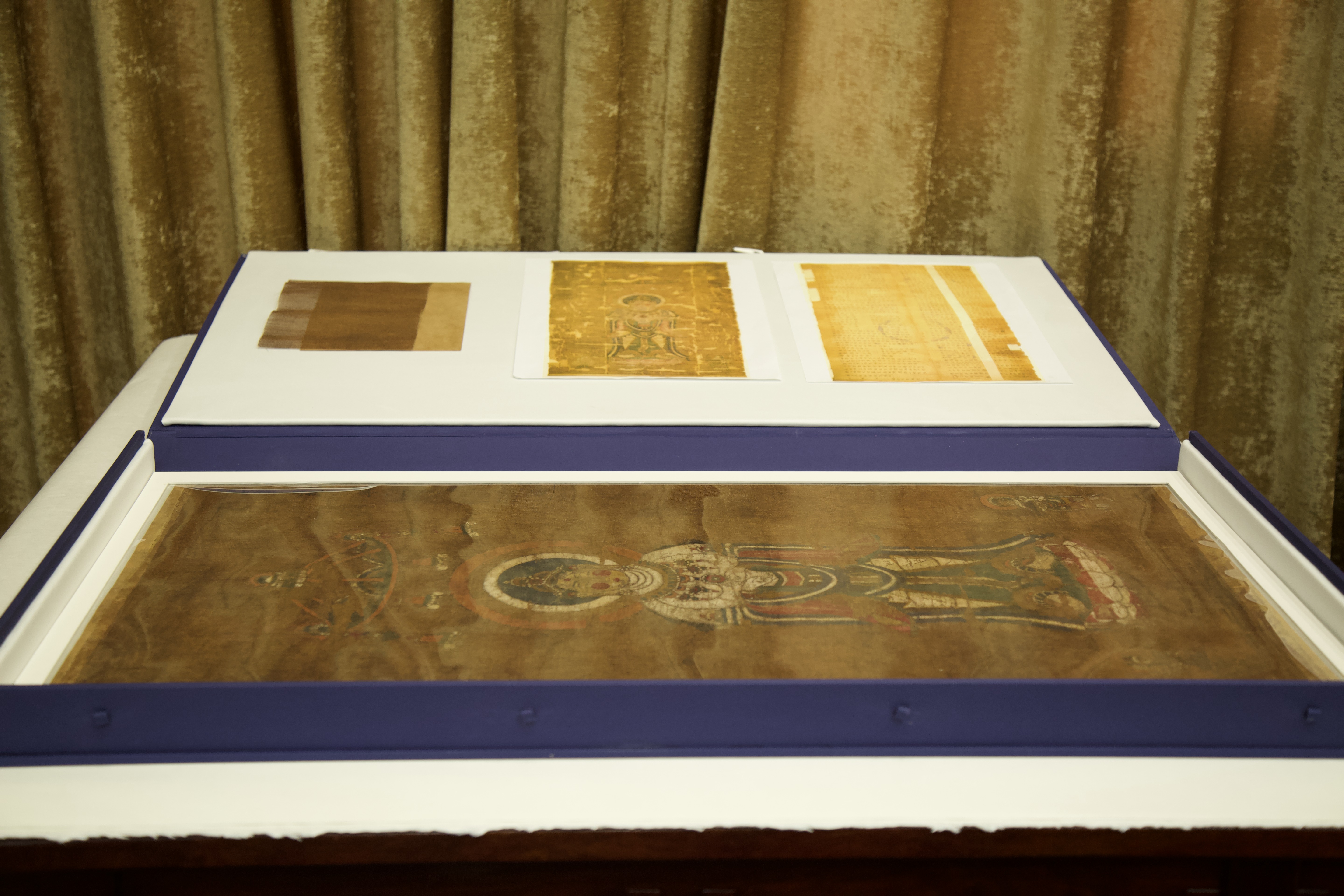
The successful completion of this project enabled this Dunhuang linen painting with both cultural relic and documentary value to regain its vitality through multi-party collaboration. It also accumulated valuable experience in the field of Dunhuang painting and document preservation, and provided a technical reference for the restoration of similar cultural relics.